Sunflower Farmhouse Typeface Review: A Friendly Display Font for Brand Identity
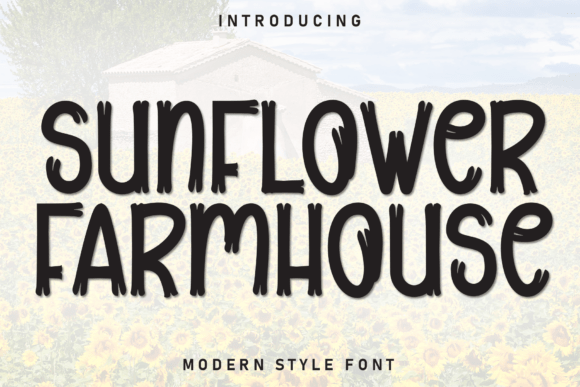
I remember the exact moment I realized Sunflower Farmhouse was going to be the backbone of this project. It was 2 AM, and I was staring at a blank brand board for a new artisanal skincare line called "Root & Bloom." The previous logo concepts felt too clinical, like they belonged in a laboratory rather than a sunlit bathroom shelf. I needed warmth. I needed approachability without sacrificing legibility. That’s when I dragged Sunflower Farmhouse into my design software. It wasn’t just a font choice; it was a tonal shift. This casual and neat display font that combines simplicity with a friendly, approachable vibe immediately softened the entire visual identity. Featuring clean lines, balanced letterforms, and subtle rounded edges, it captures the essence of modern farmhouse aesthetics while remaining distinctly professional.
Sunflower Farmhouse Logo Design for Artisanal Brands
When testing Sunflower Farmhouse as a primary logotype, the first thing I noticed was its confidence at large sizes. As a premium display typeface, it doesn’t need much help to stand out. In our logo draft, we used it for the word "Bloom," letting the rounded terminals do the heavy lifting. The subtle curves prevent the design from feeling harsh or corporate, which is crucial for brands trying to build an emotional connection with their audience. Unlike many decorative fonts that sacrifice readability for style, Sunflower Farmhouse maintains excellent clarity even when stylized.
I also tested it on a simple wordmark layout for the full business name. The balanced letterforms ensure that the x-height remains consistent, preventing the text from looking top-heavy or cramped. For small business owners and creative studios looking to establish a memorable brand identity, this font offers a unique sweet spot. It feels handcrafted but is structured enough to look intentional. When paired with a minimalist icon—a simple leaf or droplet—the typography carries the weight of the design without needing excessive embellishment. This makes it an ideal logo font for bakeries, boutiques, and lifestyle brands that want to appear welcoming yet established.
Sunflower Farmhouse Packaging Design and Product Labels
The true test of any fonts intended for commercial use is how they perform on physical assets. I created a mockup of a candle jar label using Sunflower Farmhouse, and the results were striking. The font’s inherent friendliness translated perfectly to the tactile experience of holding a product. On the packaging, the text didn’t just sit there; it invited the customer to engage. The clean lines ensured that essential information, like ingredients and volume, remained readable against complex background textures or kraft paper finishes.
One specific advantage of Sunflower Farmhouse in packaging design is its versatility across different materials. Whether printed on glossy vinyl stickers or embossed on matte cardboard, the subtle rounded edges hold up well. They don’t get lost in fine details, nor do they bleed excessively during offset printing. For handmade sellers and online shop owners, this reliability is invaluable. You can trust that the visual hierarchy you establish in your digital proof will translate accurately to the final product. The font’s personality adds a layer of perceived value, making generic products feel curated and thoughtful.
Sunflower Farmhouse Social Media Graphics and Digital Presence
In the age of scroll-based marketing, grabbing attention in under a second is critical. I applied Sunflower Farmhouse to a series of Instagram posts for the Root & Bloom campaign, focusing on quote cards and promotional banners. Because it is a display font, it demands space. I found that short phrases worked best, allowing each character to breathe. The friendly, approachable vibe resonated strongly with users who are tired of sterile, corporate aesthetic feeds.
For web designers and content creators, using Sunflower Farmhouse in website headers or hero sections can instantly define the site’s mood. It pairs beautifully with ample white space, creating a sense of openness and calm. However, I must note that it is not suited for long body text. Its decorative nature, while charming, can cause eye fatigue if used for paragraphs. Instead, treat it as an accent font for headlines, pull quotes, or navigation labels. This strategic use ensures that your digital presence remains engaging without compromising user experience or accessibility standards.
Sunflower Farmhouse Font Pairing Strategies
No typeface exists in isolation, and finding the right companion for Sunflower Farmhouse is key to a cohesive design system. Given its casual and neat characteristics, it pairs exceptionally well with clean sans serif fonts for secondary information. In our branding project, I combined Sunflower Farmhouse with a geometric sans serif for body copy and UI elements. This contrast highlights the warmth of the display font while providing the structural neutrality needed for readability.
For more rustic or vintage-inspired projects, pairing it with a classic serif font can create a sophisticated editorial look. The juxtaposition of the rounded, friendly display letters against the sharp, traditional serifs creates visual interest and depth. Avoid pairing it with other script or handwritten fonts unless you are highly experienced with font pairing. The combination can easily become cluttered and compete for attention. Stick to neutral partners that let Sunflower Farmhouse shine as the star of the typographic hierarchy.
Sunflower Farmhouse Limitations and Best Practices
While Sunflower Farmhouse is a versatile tool, it has clear boundaries. It is not designed for formal corporate communications, legal documents, or technical manuals where strict neutrality is required. Its personality is too distinct for contexts demanding absolute seriousness. Additionally, due to its decorative qualities, it should never be used for dense blocks of text or small point sizes (below 14pt) where legibility becomes compromised.
Before committing to this font for a major client project, I always recommend downloading the trial version to test it extensively. Check the included styles, alternates, and ligatures if available, as these can add unique flair to your designs. Also, verify the file formats and webfont availability to ensure smooth implementation across your chosen platforms. Finally, always review the commercial license carefully. Using a commercial font in client work, merchandise, or print-on-demand products requires proper licensing to avoid legal issues. Understanding the scope of usage protects both your reputation and your client’s business.