Spooky Muffin: A Playful Display Font for Halloween Branding
I opened a blank InDesign file late on a Tuesday, staring at the white void of a new brand board. The client was a local artisanal bakery launching a limited-edition autumn line, and they wanted something that felt festive but not cheesy. They specifically asked for "friendly spookiness." That’s when I pulled Spooky Muffin from my library. It wasn’t just another Halloween typeface; it had a specific weight and curve structure that immediately suggested personality. As I typed out the headline, the letters didn’t just sit there—they seemed to bounce with a quirky energy that fit the brief perfectly.
This review isn’t about theoretical design principles. It’s about how this font performed when I actually applied it to real-world assets: a logo draft, a packaging mockup, a business card, a website header, and social media layouts. If you are looking for a creative font that adds a sweet and spooky touch to your designs, here is my honest take on whether Spooky Muffin belongs in your toolkit.
Why Spooky Muffin Works as a Display Font for Seasonal Campaigns
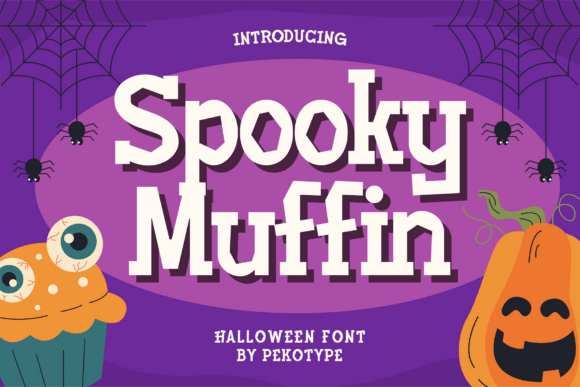
When evaluating any set of Fonts, the first thing I check is its primary function. Spooky Muffin is clearly designed as a display font, meaning it shines brightest in large sizes where its character can be appreciated. The visual characteristics are distinct: the curves are exaggerated but controlled, avoiding the jagged, horror-movie aesthetic that often feels aggressive or cheap. Instead, it leans into a playful scare, making it ideal for brands that want to tap into the holiday spirit without alienating customers who prefer a softer approach.
In my testing, I found that the font’s weight holds up well against complex backgrounds. When I placed it over a textured, dark purple background on a digital flyer, the contrast remained sharp. This is crucial for modern typography systems where readability on screens is paramount. Unlike some decorative fonts that lose their shape when scaled down, Spooky Muffin retains its integrity. However, it is important to note that this is not a body text font. Trying to use it for long paragraphs would result in visual fatigue for the reader. Its strength lies in headlines, titles, and short phrases where impact matters more than information density.
Testing Spooky Muffin on Packaging Labels and Product Mockups
The true test of a commercial font is how it translates from screen to physical product. For the bakery project, I created a mockup of a cupcake box label. I paired Spooky Muffin with a clean sans serif font for the ingredient list to create a balanced visual hierarchy. The juxtaposition worked surprisingly well. The whimsical nature of the display font drew the eye to the product name, while the neutral supporting typeface provided the necessary clarity for details.
I also tested the font on a sticker label for a skincare product—a bit of an unconventional choice, but the client loved the idea of "spooky self-care" for October. Here, the friendly spookiness of the letterforms prevented the design from feeling too childish. The curves softened the edges of the overall composition, making the brand feel approachable. This versatility is rare in seasonal typefaces. Many Halloween fonts are too narrow or too ornate to work on curved surfaces like jars or bottles. Spooky Muffin has enough open counter-space (the negative space inside letters) to remain legible even when wrapped around cylindrical objects.
Spooky Muffin for Social Media Graphics and Digital Ads
Social media graphics demand immediate attention. In a crowded feed, you have less than a second to stop the scroll. I used Spooky Muffin for Instagram story templates and Facebook ad headers. The font’s unique silhouette stands out because it doesn’t rely on heavy stroke weights or excessive decoration to grab attention. It relies on shape. When combined with bright, contrasting colors like orange, teal, or deep plum, the text became the focal point of the design.
One practical observation: when designing for mobile devices, the spacing between characters (kerning) in Spooky Muffin is generous by default. This prevents the letters from clumping together on smaller screens, which is a common issue with condensed display fonts. You don’t need to spend hours adjusting tracking manually. This efficiency makes it a valuable asset for content creators and marketers who need to produce high-quality design assets quickly.
Font Pairing Strategies for Balanced Brand Identity
No single typeface can carry a entire brand identity alone. To make Spooky Muffin work in a comprehensive branding system, you need to pair it strategically. My recommendation is to avoid pairing it with other serif fonts, as the combination can feel cluttered and dated. Instead, look for modern simplicity.
A clean sans serif font is the best partner for this display font. The geometric neutrality of a sans serif balances the organic, playful curves of Spooky Muffin. This creates a professional yet fun tone, which is essential for businesses that want to appear established but not stiff. For example, in the website header mockup, I used a light-weight sans serif for the navigation menu. This allowed the bold, quirky header to dominate the hero section without creating visual competition. The result was a cohesive look that felt intentional rather than accidental.
If you are working on editorial design or blog layouts, consider using Spooky Muffin only for pull quotes or section dividers. Using it sparingly ensures that the font remains a special accent rather than a distracting element. This restraint is key to maintaining professionalism in your design work.
Limitations and Best Practices for Small Business Owners
While Spooky Muffin is versatile, it has clear limitations. It is not suitable for formal corporate communications, legal documents, or any context requiring serious, authoritative tone. The playful nature of the font communicates informality and creativity. If your brand is a law firm or a medical clinic, this typeface will undermine your credibility. Similarly, avoid using it for long-form reading. The quirks that make it charming in headlines become tedious in paragraphs.
Before committing to this font for final client work, always test it in various contexts. Print a proof of your business cards. View your logo on a dark mode interface. Check how it looks in grayscale. These small tests reveal issues that might not be visible on your vibrant monitor. Additionally, ensure you understand the licensing terms. As a premium font, Spooky Muffin may have different rules for commercial use versus personal projects. Always verify that your license covers the specific mediums you plan to use, such as merchandise, websites, or print-on-demand products.
Final Verdict on Spooky Muffin for Creative Projects
After weeks of using Spooky Muffin across multiple deliverables, I can confidently say it is a high-quality addition to any designer’s library. It delivers exactly what it promises: a playful scare with a sweet twist. It is not a gimmick; it is a well-crafted display font that understands the nuances of visual hierarchy and brand perception.
For graphic designers, brand designers, and entrepreneurs looking to add a touch of seasonal charm to their marketing materials, this font offers both style and functionality. It handles the demands of logo design, packaging design, and web design with ease. By pairing it thoughtfully with simpler typefaces and respecting its limitations, you can create memorable, engaging designs that resonate with your audience. If you are ready to bring a little friendly spookiness to your next project, Spooky Muffin is a reliable and effective choice.