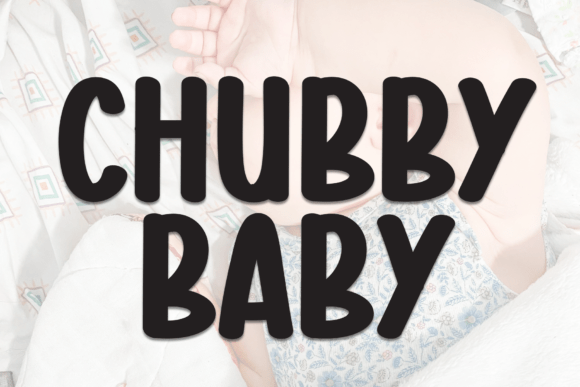
Chubby Baby Typeface for Modern Web Branding
I was staring at a blank Figma canvas, trying to fix the sterile look of a coaching website’s hero section. The client wanted "friendly" and "approachable," but every standard sans-serif felt too corporate, and every script font looked messy on mobile. That was when I stumbled upon Chubby Baby. It wasn’t just another decorative option; it was exactly the missing piece for a digital layout that needed warmth without sacrificing clarity. As a web designer constantly hunting for the right fonts to elevate a brand’s voice, I realized this typeface offered a unique blend of casual charm and structural neatness that is rare in the current market.
Chubby Baby Display Font for Landing Page Headlines
When you first load Chubby Baby, its character as a display font becomes immediately apparent. It isn’t designed to fill paragraphs of body text; rather, it commands attention in large sizes where personality matters most. In my recent project for a boutique online store, I tested this font in the main hero banner. The clean lines and balanced letterforms provided a sturdy foundation, while the subtle rounded edges softened the overall tone. This combination allowed the headline to feel inviting rather than aggressive, which is crucial for converting visitors who are scanning quickly. The font captures the essence of a modern, approachable brand identity, making it an excellent choice for campaign landing pages where you need to establish trust within seconds.
Visual Hierarchy and Scannability in Digital Layouts
One of the biggest challenges in UI design is maintaining visual hierarchy without cluttering the interface. Using Chubby Baby for section headers helped solve this problem elegantly. Because the font has a distinct shape, it naturally draws the eye, allowing users to scan the page structure effortlessly. I paired it with a simple, neutral sans-serif for the body copy, creating a clear contrast between the decorative headings and readable text. This pairing strategy ensures that the display nature of Chubby Baby doesn’t interfere with content consumption. The rounded edges prevent the typography from feeling harsh against white backgrounds or light-colored image overlays, contributing to a smoother user experience across different screen sizes.
Chubby Baby Font for Creative Portfolio and Blog Headers
For creative professionals, establishing a personal brand often means breaking away from rigid grid systems. I used Chubby Baby on a portfolio homepage to give the artist’s name and tagline a custom logo-like feel. The font’s simplicity allows it to function almost like a logotype, yet it retains enough flexibility to be used for blog post titles or featured article headers. Unlike overly complex script fonts that can become illegible at smaller sizes, Chubby Baby maintains its legibility even when scaled down slightly. This makes it versatile for various applications, from social media graphics to email newsletter headers, ensuring consistency across all digital touchpoints. The friendly vibe it projects aligns perfectly with creators who want to appear accessible and authentic.
Readability on Mobile Devices and Small Screens
Testing Chubby Baby on mobile devices revealed some important considerations for responsive web design. While display fonts are typically reserved for desktop hero sections, their application on smaller screens requires careful attention to weight and spacing. I found that using the font for short phrases or single-word accents worked best on mobile, avoiding line breaks that could disrupt the flow. The balanced letterforms ensure that the characters do not bleed into each other, even when kerning is tight. For buttons or small call-to-action areas, however, I recommended sticking to a more utilitarian typeface. Chubby Baby shines brightest when given room to breathe, making it ideal for top-of-page elements where space is less constrained.
Chubby Baby Typeface for E-Commerce Product Banners
In the competitive world of e-commerce, product banners need to stand out without looking spammy. I integrated Chubby Baby into a series of promotional banners for a small business website selling handmade goods. The font’s neat aesthetic complemented the high-quality photography, adding a layer of professionalism that elevated the perceived value of the products. The subtle rounded edges echoed the organic shapes often found in artisanal branding, creating a cohesive visual language. When combined with clean, minimalist layouts, the font adds just enough character to keep the design from feeling flat. It serves as a reminder that typography is not just about reading; it is about feeling, and Chubby Baby successfully evokes a sense of comfort and reliability.
Font Pairing Strategies for Web Design Projects
Selecting the right companion font is critical when working with a distinctive display typeface like Chubby Baby. In my workflow, I typically pair it with a geometric sans-serif for body text to maintain a modern, tech-forward feel suitable for SaaS founders or digital agencies. Alternatively, for brands aiming for an editorial or lifestyle aesthetic, a humanist serif can create a sophisticated contrast. The key is to let Chubby Baby take the lead in the hierarchy while the secondary font handles the heavy lifting of information delivery. This approach ensures that the brand remains readable and accessible, adhering to accessibility standards while still delivering a strong visual impact. Always check the available weights and styles to ensure you have enough variety to create depth in your typographic scale.
Commercial Licensing and File Formats for Digital Assets
Before implementing Chubby Baby in any client project, verifying the commercial license is a non-negotiable step. As a digital product creator, I always ensure that the font usage covers web embedding, app development, and marketing materials. Most premium fonts come with comprehensive file formats, including OTF, TTF, and web-ready WOFF/WOFF2 files, which are essential for fast-loading websites. Checking for multilingual support is also vital if your audience spans different regions, although Chubby Baby’s straightforward Latin-based design makes it highly compatible with standard Western languages. By securing the proper licensing, designers can use the font confidently across logos, packaging designs, and digital campaigns without legal concerns.
Building a Polished Online Brand Experience
The decision to use Chubby Baby ultimately comes down to the emotional resonance you want your website to convey. In a digital landscape saturated with generic templates, a well-chosen typeface can be the differentiator that makes a brand memorable. The font’s ability to balance simplicity with friendliness makes it a powerful tool for building trust and engagement. Whether you are redesigning a course sales page, updating a blog header, or crafting a new brand kit, Chubby Baby offers the versatility to adapt to various tones while maintaining a consistent, polished look. For web designers seeking to add a touch of warmth and personality to their layouts, this font provides a reliable, stylish solution that enhances both aesthetics and usability.